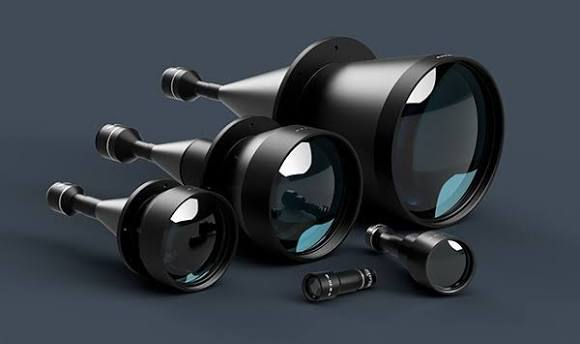
In advanced machine vision and optical inspection, accurate image measurement is essential. A BI telecentric lens is a specialized optical solution designed to provide highly precise bi telecentric lens imaging with minimal perspective distortion. These lenses are commonly used in industrial inspection, dimensional measurement, automation, electronics manufacturing, and scientific imaging where consistency and accuracy are important.
What Is a BI Telecentric Lens?
A BI telecentric lens is an optical lens designed to maintain consistent image magnification even when the object moves slightly closer to or farther from the lens. Unlike conventional lenses, which can make objects appear larger or smaller depending on their position, telecentric lenses are engineered to reduce this perspective effect.
The “BI” designation generally refers to bi-telecentric optical designs, in which both the object side and image side are telecentric. This configuration provides excellent dimensional accuracy and stable magnification, making it suitable for demanding measurement applications.
How Does a BI Telecentric Lens Work?
A telecentric lens uses carefully positioned optical elements and an aperture stop to control the paths of incoming and outgoing light rays. In a bi-telecentric design, the chief rays remain nearly parallel on both sides of the optical system.
This arrangement helps maintain consistent object size within the image. As a result, small changes in object position have much less influence on the measured dimensions. This characteristic is particularly useful for automated inspection systems where repeatable measurements are required.
Benefits of BI Telecentric Lenses
One of the primary advantages of a BI telecentric lens is high measurement accuracy. Because perspective errors are greatly reduced, the lens can produce reliable images for dimensional inspection.
Another important benefit is consistent magnification. Conventional lenses may produce different image sizes when objects are positioned at different distances. A bi-telecentric lens minimizes this variation, allowing machine vision systems to make more dependable measurements.
These lenses can also provide excellent image quality across the field of view. Their optical design helps reduce distortion, which is valuable when inspecting components with precise geometric requirements.
Applications in Machine Vision
BI telecentric lenses are widely used in industrial machine vision. They can be found in systems designed to inspect mechanical components, electronic parts, medical devices, packaging, and precision-manufactured products.
For example, manufacturers may use a BI telecentric lens to measure the diameter of a component, inspect the position of small features, verify the dimensions of molded parts, or detect manufacturing defects. Because the lens produces stable images, automated software can analyze objects more accurately.
They are also useful in robotics and automated production lines where cameras need to perform repeatable inspections without requiring constant manual adjustment.
Choosing the Right BI Telecentric Lens
Selecting the right lens depends on several factors, including sensor size, field of view, working distance, resolution, and required measurement accuracy. The camera sensor must be compatible with the lens’s optical characteristics to achieve the desired image quality.
It is also important to consider lighting. Telecentric lenses are often paired with controlled illumination systems to produce clear edges and consistent contrast. Proper lens and lighting selection can significantly improve the performance of an automated inspection system.
Conclusion
A BI telecentric lens offers an effective solution for applications that require accurate, stable, and low-distortion imaging. Its ability to maintain consistent magnification and reduce perspective errors makes it particularly valuable for precision measurement and machine vision.
As automation and quality control continue to advance, specialized optical technologies such as bi-telecentric lenses are becoming increasingly important. For manufacturers seeking reliable dimensional inspection and high-quality imaging, choosing the right BI telecentric lens can help improve measurement consistency, production efficiency, and overall inspection performance.