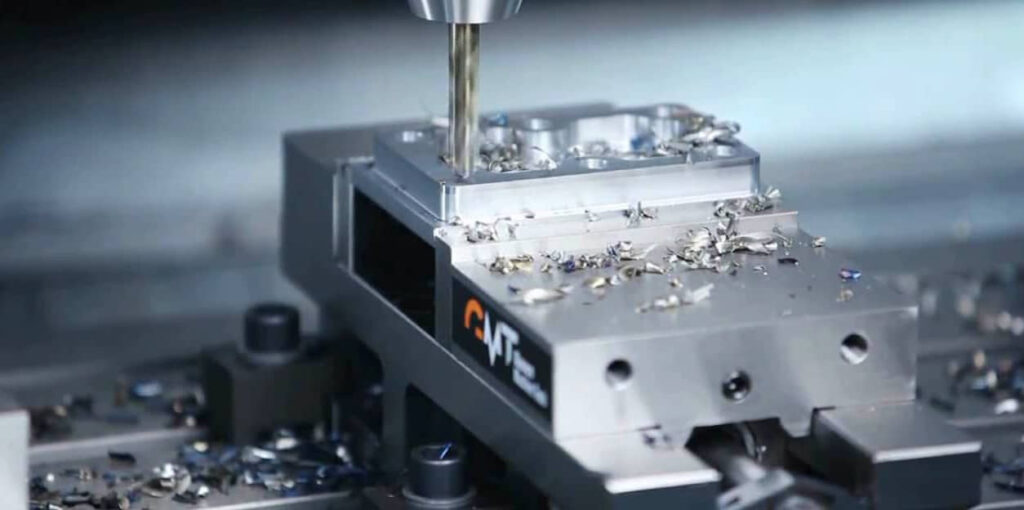
High-volume production is the backbone of modern manufacturing, demanding efficiency, consistency, and precision. In industries ranging from automotive to aerospace, the margin for error is virtually nonexistent. This is where CNC precision machining plays a pivotal role. With advanced automation, superior accuracy, and repeatable processes, CNC precision machining has become indispensable for manufacturers striving to meet high demand without compromising quality.
Understanding CNC Precision Machining
CNC, or Computer Numerical Control, precision machining refers to the use of computer-controlled machines to manufacture parts with high accuracy. Unlike traditional machining, which relies heavily on manual operation, CNC machines are programmed to execute precise movements, cuts, and shapes based on digital designs. This technology allows for the production of complex components that would be difficult or impossible to achieve manually.
CNC precision machining is widely applied in producing critical components where tight tolerances are essential. The ability to consistently replicate designs makes it ideal for high-volume production, where even small deviations can lead to costly errors or product recalls.
Consistency and Accuracy in Production
One of the most significant advantages of CNC precision machining is its ability to deliver consistent results. In high-volume manufacturing, even slight variations between parts can accumulate into serious quality issues. CNC machines are programmed with precise instructions, ensuring each component is identical to the original design.
Accuracy is measured in microns, which is critical in industries like aerospace, medical devices, and electronics. For instance, a slight deviation in an aircraft component could compromise safety, while an inconsistency in a medical device could lead to product failure. CNC precision machining eliminates these risks by providing high-fidelity reproduction of parts.
Increased Efficiency and Reduced Production Time
High-volume production demands speed without sacrificing quality. CNC precision machining significantly increases efficiency by automating processes that would take much longer manually. Once programmed, a CNC machine can operate continuously, producing hundreds or even thousands of identical parts with minimal human intervention.
Automation reduces downtime between operations, ensures optimal tool usage, and minimizes human error. Manufacturers can achieve shorter lead times and faster turnaround, making CNC precision machining an ideal solution for meeting tight production schedules.
Cost-Effectiveness for Large-Scale Manufacturing
While the initial investment in CNC machines can be substantial, the long-term benefits make it cost-effective for high-volume production. Traditional manual machining requires skilled operators for each task, increasing labor costs and potential for mistakes. CNC precision machining reduces the dependency on manual labor, lowers scrap rates, and optimizes material usage.
Moreover, CNC machines can operate around the clock with minimal supervision. The ability to run multiple shifts without sacrificing quality means that manufacturers can meet high production quotas efficiently, ultimately reducing the cost per part.
Flexibility and Scalability in Production
CNC precision machining is not only precise but also highly flexible. Adjustments to design can be implemented quickly by reprogramming the machine, allowing manufacturers to adapt to market changes or customize products without significant downtime.
This flexibility is essential in high-volume production environments where product variations, updates, or improvements are common. Manufacturers can scale operations up or down depending on demand without investing in new tooling for every change. CNC precision machining ensures that scalability does not come at the cost of quality or efficiency.
Integration with Modern Manufacturing Technologies
Modern manufacturing increasingly relies on technologies like CAD/CAM software, robotics, and IoT-enabled machines. CNC precision machining integrates seamlessly with these systems, creating a fully connected and automated production line.
CAD (Computer-Aided Design) allows engineers to create highly detailed digital models, which are then translated into CNC machine instructions using CAM (Computer-Aided Manufacturing) software. This digital workflow reduces errors, improves precision, and enhances productivity. Furthermore, CNC machines equipped with sensors and monitoring systems can provide real-time feedback, allowing for predictive maintenance and minimizing unexpected downtime.
Meeting Regulatory and Industry Standards
Many industries, particularly aerospace, medical, and automotive sectors, require strict adherence to regulatory standards. CNC precision machining ensures that every part meets exact specifications and tolerances, making it easier for manufacturers to comply with industry regulations.
By producing parts with minimal variation, CNC machining reduces the likelihood of defects and product recalls, protecting the manufacturer’s reputation and ensuring customer satisfaction. Consistency in production also facilitates easier documentation and traceability, which is often required for certification and auditing purposes.
Reducing Waste and Environmental Impact
Efficiency and precision in high-volume production are not just about cost savings—they also contribute to sustainability. CNC precision machining reduces material waste by cutting components with exact specifications, minimizing scrap. Optimized production processes also lower energy consumption, as machines operate efficiently without unnecessary repetitions.
In industries where sustainability is becoming a key concern, CNC precision machining offers a way to produce high volumes of parts responsibly while maintaining quality standards.
Supporting Innovation and Complex Designs
High-volume production does not have to limit innovation. CNC precision machining enables manufacturers to produce intricate designs and geometries that were previously impossible or too time-consuming with manual methods. This capability allows companies to differentiate their products and incorporate advanced features without compromising production speed or consistency.
The ability to prototype quickly, test, and transition directly to large-scale production ensures that innovations can reach the market faster, giving manufacturers a competitive edge.
Conclusion
CNC precision machining is a cornerstone of high-volume production, providing unmatched accuracy, consistency, efficiency, and flexibility. From reducing waste and labor costs to supporting complex designs and ensuring regulatory compliance, CNC precision machining empowers manufacturers to meet the demands of modern production environments.
In an era where speed, precision, and quality are critical, relying on CNC precision machining is not just advantageous—it is essential. For industries seeking to maintain competitiveness and deliver superior products at scale, integrating CNC precision machining into the production process is a strategic necessity.
CNC precision machining ensures that manufacturers can achieve high-volume production without compromising on quality, safety, or innovation, making it a vital component of modern manufacturing success.