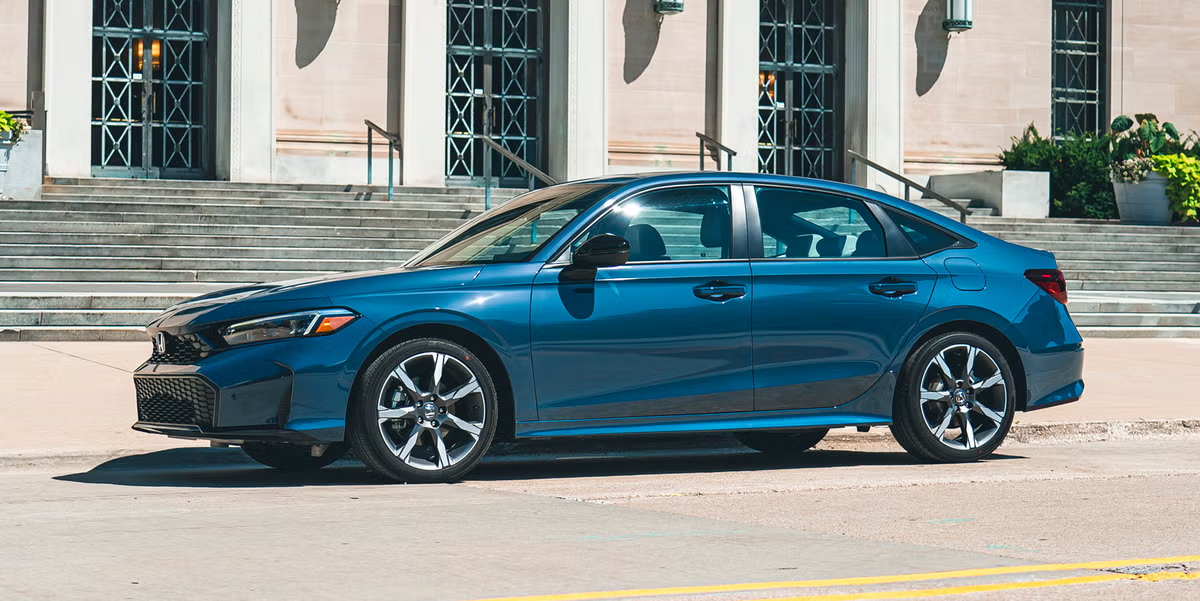
Shoppers seeking a dependable balance of efficiency, affordability, and everyday practicality often turn to older hybrids that have proven their worth over time. The 2007 honda civic hybrid is one such vehicle, built on the reliable Civic platform while integrating Honda’s respected IMA hybrid technology into a compact sedan. For many drivers, this combination delivers a compelling ownership experience, especially in urban commuting where hybrid systems shine. In this article, we explore what makes the model year notable, including its powertrain, fuel economy, interior practicality, and what to look for when buying a used one.
Powertrain and performance
The core of this hybrid is Honda’s Integrated Motor Assist system working in concert with a modest 1.3-liter i-VTEC gasoline engine. Paired with a continuously variable transmission, the setup provides smooth acceleration and solid low-end torque suited for city driving. The combined output is typically around 110 horsepower, enough for everyday highway merging and effortless around-town cruising. The system is designed to recover energy during braking, and many owners remember its quiet, reassuring behavior when the engine idles at stoplights. While it isn’t a performance-focused vehicle, the hybrid powertrain delivers predictable, efficient operation that aligns with commuter needs.
Fuel efficiency and driving experience
Compared with its conventional Civic siblings, the hybrid emphasizes fuel economy. In real-world use, drivers of the 2007 honda civic hybrid often enjoy excellent city mpg and comfortable highway travel, especially when tires and aerodynamics are in good shape. The IMA system can operate in electric-assisted mode at low speeds, which helps reduce fuel burn during short trips and stop-and-go traffic. Overall, the driving experience favors smoothness and efficiency over speed, but the compromise is well suited to daily commuting and short road trips where reliability matters most.
Interior practicality and cargo
The cabin layout emphasizes practicality and efficiency. Front seating is comfortable for longer drives, and rear seating accommodates adults reasonably well for a compact sedan. Cargo space is competitive for its class, though the hybrid’s battery pack does modestly affect trunk depth compared with non-hybrid Civics of the era. Materials quality and infotainment options are focused on ease of use and durability, which adds to the model’s appeal for buyers seeking low-maintenance ownership with sensible day-to-day usability.
Maintenance, reliability, and ownership costs
Reliability is a strong point for many Honda hybrids, but prospective buyers should pay attention to the health of the hybrid battery and electric motor over time. Replacement costs for older IMA batteries can be a consideration, though many units remain on the road with solid service histories. Regular maintenance—oil changes, transmission fluid, brakes, and cooling system checks—remains important, and finding a shop familiar with Honda hybrids can help keep ownership costs reasonable. With a well-documented service history and careful ownership, a 2007 Civic Hybrid can continue to deliver dependable operation and reasonable resale value in the used-car market.
Buying tips and resources
When evaluating a used 2007 honda civic hybrid, prioritize a thorough inspection of the hybrid system, battery health indicators, and the vehicle’s overall maintenance records. Check for smooth transitions between electric-assisted and gasoline-driven modes during a test drive, and ensure the brakes and cooling components are functioning properly. For more automotive tips, buying guides, and model-specific resources, consider visiting a trusted automotive resource hub: InRockry.